Deg-Bhapka Method: Why a 400-Year-Old Perfumery Technique Still Matters Today
-
admin
- Posted on
Introduction
Before modern perfume factories had automated equipment, temperature-controlled systems and large-scale production lines, Indian perfumers were already creating remarkably complex fragrances using traditional distillation.
One of the most fascinating examples is the Deg-Bhapka method of Kannauj.
For centuries, this traditional technique has been used to transform flowers, herbs, woods and other aromatic materials into attars and natural fragrance products.
The process is slow, highly hands-on and dependent on the experience of the perfumer.
Yet the technique has survived.
Today, Shubham Natural Fragrances, a fragrance manufacturer based in Kannauj, operates in an industry where traditional Indian perfumery and modern fragrance requirements exist side by side.
Understanding Deg-Bhapka is therefore not just about looking at an old manufacturing technique. It is about understanding the craftsmanship behind some of India’s most distinctive natural fragrances.
What Is the Deg-Bhapka Method?
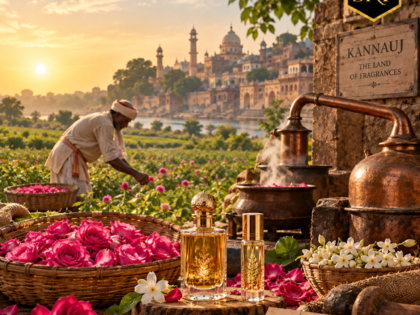
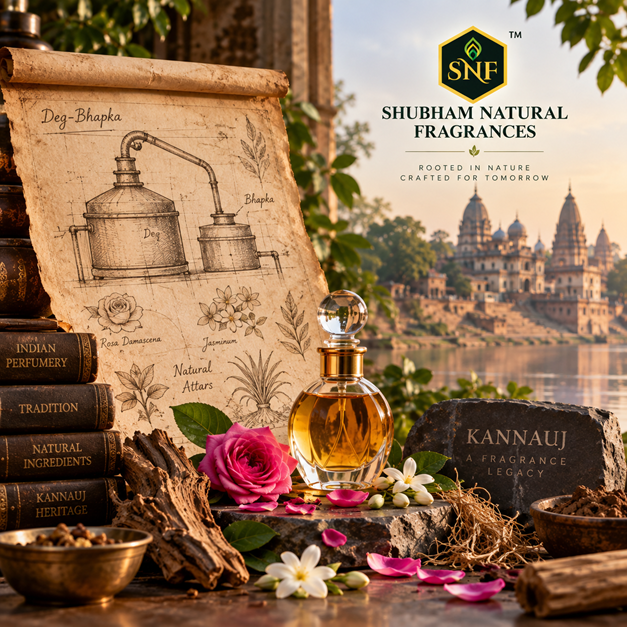
Deg-Bhapka is a traditional hydro-distillation technique associated with the production of Indian attars and aromatic distillates.
The name comes from the traditional vessels used during the process.
The Deg is the vessel where aromatic raw materials and water are heated.
The Bhapka is the receiving vessel where the aromatic distillate is collected, often into a base material such as sandalwood oil depending on the type of attar being produced.
A traditional setup also includes a connecting pipe between the vessels.
The entire arrangement is designed to capture aromatic vapours generated during controlled heating.
Unlike a simple boiling process, successful attar production requires careful control and considerable practical knowledge.
How Does Deg-Bhapka Distillation Work?
The process can be understood through a series of carefully managed stages.
1. Selecting the Raw Material
The process starts with the selection of suitable aromatic material.
Depending on the desired fragrance, this could include:
- Rose petals
- Jasmine
- Mogra
- Kewra
- Herbs
- Spices
- Wood
- Vetiver
- Other botanical materials
The quality and freshness of the raw material can have a significant effect on the resulting aroma.
2. Preparing the Deg
The selected material is placed inside the traditional deg along with water.
The vessel is then sealed carefully.
Traditionally, the sealing process is important because uncontrolled vapour loss can affect the efficiency of distillation.
3. Controlled Heating
The deg is heated gradually.
As the water and aromatic material are heated, fragrant vapours are released.
The perfumer has to monitor the process rather than simply leave the system unattended.
4. Vapour Transfer
The aromatic vapour travels through the connecting pipe towards the bhapka.
This is one of the most recognisable features of the traditional Deg-Bhapka system.
5. Condensation and Collection
The vapours enter the receiving vessel and condense.
Depending on the attar being produced, the aromatic distillate is captured in a suitable base.
6. Repeated Distillation
Some traditional attars require repeated distillation.
This allows more aromatic material to be incorporated into the base and helps develop the desired fragrance character.
7. Maturation
Traditional attars may also be allowed to mature.
Over time, the fragrance components can integrate and develop a smoother overall profile.
The final product is then filtered, checked and prepared for packaging.
Why Is Deg-Bhapka Different from Modern Distillation?
Modern fragrance manufacturing can use sophisticated stainless-steel equipment, automated controls, industrial condensers and advanced extraction technologies.
Deg-Bhapka is fundamentally different.
It relies heavily on:
Human experience
The perfumer observes and adjusts the process based on practical knowledge.
Traditional equipment
The vessels and setup have evolved from generations of Indian perfumery practice.
Natural raw materials
Many traditional attars begin with flowers, herbs, woods or other botanical materials.
Time
The process can require patience, repeated distillation and careful handling.
This does not mean traditional equipment is automatically superior to modern technology.
Rather, Deg-Bhapka produces a different kind of manufacturing experience and remains important because of its connection with traditional Indian perfumery.
The Role of the Perfumer
A traditional Deg-Bhapka system may look simple compared with modern industrial machinery.
But operating it effectively requires experience.
The perfumer needs to understand:
- Raw material characteristics
- Water quantity
- Heating intensity
- Distillation duration
- Vapour flow
- Condensation
- Fragrance development
- Base-oil characteristics
- Maturation requirements
This knowledge is often developed through years of practical experience.
That human element is one of the defining characteristics of traditional Kannauj perfumery.
Which Fragrances Can Be Made Using Traditional Techniques?
Kannauj’s traditional perfumery is known for a wide variety of attars and aromatic products.
Examples include:
Rose Attar
A floral fragrance created around the rich aroma of roses.
Kewra Attar
Known for its distinctive floral character and connection with Indian perfumery.
Mogra Attar
A traditional floral fragrance inspired by the intense aroma of Mogra flowers.
Shamama
A complex traditional blend containing multiple aromatic ingredients and spices.
Majuma
A rich aromatic blend traditionally associated with Indian attar culture.
Mitti Attar
Inspired by the earthy smell of wet soil after rainfall.
Each fragrance requires its own approach to raw materials, distillation and blending.
Why Temperature and Timing Matter
One of the challenges of traditional distillation is maintaining the right balance during heating.
Excessive heat can affect delicate aromatic materials.
Insufficient heat may reduce the efficiency of vapour generation.
The duration of distillation also matters because different materials release their aromatic components differently.
This is why experienced perfumers pay attention to the process rather than relying on a single fixed formula.
Traditional perfumery is partly a science of materials and partly a craft developed through observation.
From Kannauj Workshops to Modern Fragrance Businesses
Kannauj’s fragrance industry has changed considerably over time.
Today’s buyers may not only want traditional attars.
They may require:
- Bulk fragrance oils
- Essential oils
- Floral waters
- Perfume compounds
- Incense fragrances
- Cosmetic fragrance materials
- Private-label products
- Custom fragrance solutions
- Export-ready products
This has created a need for manufacturers that understand both traditional fragrance culture and modern commercial requirements.
Shubham Natural Fragrances operates within this evolving fragrance industry from Kannauj.
The company offers a diverse range of aromatic products, allowing businesses to source traditional and modern fragrance materials according to their applications.
Shubham Natural Fragrances and Kannauj’s Fragrance Heritage
Established in 1999, Shubham Natural Fragrances has its roots in Kannauj, a city closely associated with India’s traditional perfumery.
The company manufactures and supplies products across several fragrance categories, including:
- Natural Attars
- Essential Oils
- Floral Waters
- Rose Water
- Spice Oils
- Natural Absolutes
- Fragrance Oils
- Perfume Compounds
- Agarbatti Fragrances
- Incense Fragrances
- Aromatic Blends
For fragrance businesses, the significance of working with a Kannauj-based manufacturer goes beyond simply purchasing a fragrance.
It provides access to a region where traditional aromatic knowledge has remained part of the local manufacturing culture.
Businesses can explore the available fragrance range and manufacturing solutions through pureessentialoil.in.
Can Traditional Perfumery Work Alongside Modern Technology?
Absolutely.
Traditional and modern approaches do not necessarily have to compete with each other.
A fragrance manufacturer can preserve traditional techniques while using modern systems for areas such as:
- Quality checking
- Product storage
- Packaging
- Inventory management
- Documentation
- Batch tracking
- Order processing
- Export operations
- Customer communication
This combination can help preserve the character of traditional perfumery while meeting the expectations of modern buyers.
For a company such as Shubham Natural Fragrances, this balance is particularly relevant when serving both traditional fragrance customers and commercial businesses.
Why Perfume Brands Are Interested in Traditional Indian Attars
Modern perfume brands increasingly look for distinctive fragrance stories.
A traditional Indian attar can provide more than an aroma. It can offer a connection to:
- Indian culture
- Natural ingredients
- Traditional craftsmanship
- Regional heritage
- Artisanal production
- Unique fragrance profiles
For a niche perfume company, these characteristics can become part of the product’s identity.
A brand developing a collection around Indian perfumery may explore fragrances such as Rose, Kewra, Mogra, Shamama, Majuma or Mitti Attar.
Deg-Bhapka and the Future of Kannauj
The survival of Deg-Bhapka is significant because traditional knowledge can easily disappear when younger generations move towards different professions.
Preserving the technique requires more than keeping old equipment.
It requires experienced people who understand how the process works and businesses that continue to create demand for traditional fragrances.
At the same time, Kannauj’s fragrance industry has an opportunity to modernise without losing its identity.
The future can involve:
Traditional craftsmanship + modern quality systems
Natural ingredients + new fragrance applications
Kannauj heritage + international markets
Artisanal attars + modern perfume brands
This combination can help traditional Indian perfumery remain commercially relevant.
Why Deg-Bhapka Still Matters
The importance of Deg-Bhapka is not simply because it is old.
Its importance comes from what it represents.
It represents a different approach to fragrance production where the raw material, equipment, process and perfumer are closely connected.
It also represents the history of Kannauj’s perfume-making culture.
When you experience a traditional Kannauj attar, you are experiencing the result of a process that has been refined over generations.
That heritage gives these fragrances a story that modern fragrance businesses can build upon.
Explore Traditional Fragrances from Kannauj
If you are searching for an Attar Manufacturer in Kannauj, Natural Fragrance Manufacturer in Kannauj, or Essential Oil Manufacturer in Kannauj, Shubham Natural Fragrances offers a wide selection of fragrance and aromatic products.
From traditional attars and essential oils to floral waters, fragrance compounds and incense fragrances, the company serves businesses looking for fragrance products from Kannauj.
For wholesale, bulk supply, private-label and manufacturing requirements, visit:
Conclusion
The Deg-Bhapka method is a remarkable part of India’s fragrance heritage.
It demonstrates how traditional Indian perfumers developed methods for capturing the aromas of flowers, herbs, woods and other natural materials long before modern fragrance manufacturing became widespread.
Kannauj continues to be strongly associated with this tradition.
For Shubham Natural Fragrances, being based in Kannauj provides a direct connection to this centuries-old fragrance culture while allowing the company to serve the requirements of today’s fragrance businesses.
The future of Indian perfumery does not have to choose between tradition and modernisation.
The real opportunity lies in bringing both together.
Traditional knowledge can preserve the identity. Modern manufacturing can expand its reach.
And Kannauj can continue to tell India’s fragrance story to the world.
FAQs
1. What is the Deg-Bhapka method?
Deg-Bhapka is a traditional Indian hydro-distillation technique used to produce attars and other aromatic distillates. It uses a deg for heating the aromatic material and a bhapka for collecting the condensed distillate.
2. Where is the Deg-Bhapka method traditionally used?
The technique is strongly associated with Kannauj, Uttar Pradesh, one of India’s historic centres of traditional perfumery.
3. Which fragrances are traditionally produced in Kannauj?
Kannauj is known for fragrances such as Rose Attar, Mogra Attar, Kewra Attar, Mitti Attar, Shamama, Majuma and various other natural and blended attars.
4. Does Shubham Natural Fragrances manufacture attars?
Yes. Shubham Natural Fragrances is a Kannauj-based manufacturer and supplier offering natural attars along with essential oils, floral waters, fragrance oils, perfume compounds and other aromatic products.
5. Can businesses order fragrance products in bulk?
Yes. Businesses can contact Shubham Natural Fragrances for bulk, wholesale, manufacturing, private-label and export-related fragrance requirements through pureessentialoil.in.